

Seeing the “Inscape” of Christ

by Doug Webber
The Inner Landscape of All Things
Recently, I have taken a bit of a dive into the poetry and thought of Gerard Manley Hopkins. One of the words he gave us is “inscape,” which refers to the intrinsic nature or inner landscape of something, its unique identity, whether inanimate or animate. I believe this word can also help us speak of our inner experience, a landscape in and of itself, including Jesus’ experience during the week of his passion.
For Hopkins, a Jesuit priest immersed in the Ignatian worldview, God was expressed in all things, but particularly, for him, in nature: the unique selves of flora, wind, sea, and earth. His best poems are on this topic.
Christ in Ten Thousand Places
I also feel invited by Hopkins to look for God in other humans, as he writes in his poem “As Kingfishers Catch Fire”:
“For Christ plays in ten thousand places,
Lovely in limb and lovely in eyes not his,
To the Father through the features of men’s faces.”
Humans, unlike many mammals, look at one another frequently when communicating. Looking into another person’s eyes, particularly if sustained, is a profound act of intimacy. It is looking into another’s soul, into their inscape.
The Sacred Gaze of the Eucharist
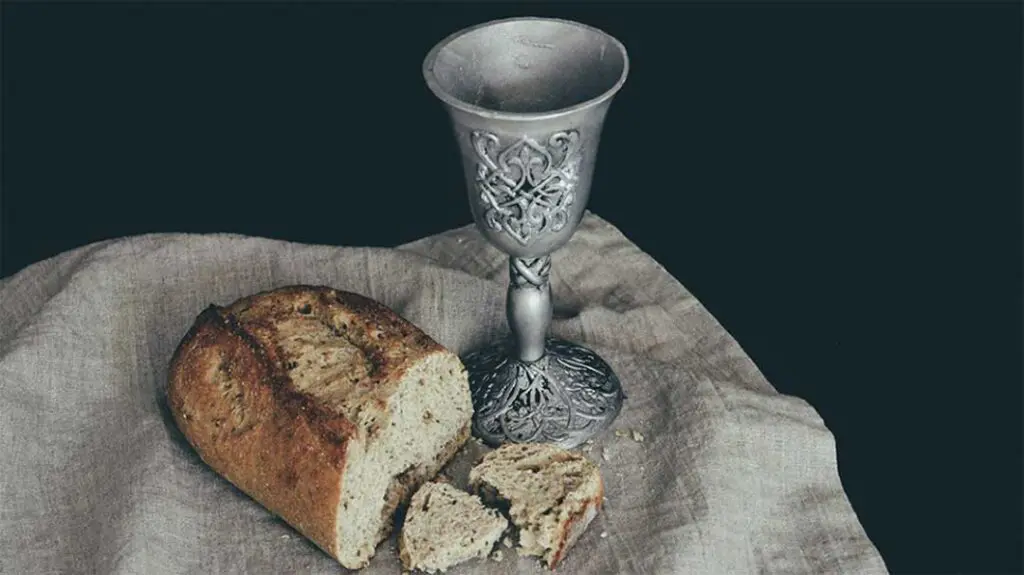
During the Eucharist, when a priest or server offers not only the bread and wine but also offers themselves with a gaze right into my eyes, it can undo me. That is the part of the liturgy most dear to me. I am very disappointed when the server is rushing along, averting their gaze.
I want you to pause and see me, as you represent Jesus seeing me and offering himself. As I return your gaze, I am offering myself to you. We are in this together.
The Eucharist demonstrates Jesus sharing our life in his last act of living: dying. I imagine him looking into the eyes of his close ones at the Last Supper, again in the Garden of Gethsemane, into Judas’ eyes, into the eyes of Herod, Pilate, the soldiers, those who ministered to him along the route to Calvary, the thieves beside him, and his mother. And they looked into his eyes. They saw him. He saw them.
Jesus’ Shattered Inscape
I am thinking that the week of hell Jesus was in would have made for a very disordered internal landscape. In the normal flow of consciousness, there is a bedrock sense of self that allows one to go about one’s day, engage with others, and relate to one’s environment. A mental and emotional structure. We don’t have to think about it. We are not conscious of it.
When that bedrock inscape is shattered or deeply fissured, however, we are very conscious of its absence. We are internally dismembered. The practices one might use to center, settle, and reorient, including prayer, are mostly inaccessible.
Jesus’ consciousness, I imagine, was Dresden-ed, torn apart internally, even as he was bruised and beaten externally. He was in anguish in the Garden of Gethsemane: “Take this cup from me.” He felt deserted by the Father on the cross: “My God, my God, why have you forsaken me?”
You may have experienced something akin to this, perhaps in physical or mental illness, in grief, in loss, or in the unrelenting demands of life. In fact, I would be very surprised if you haven’t.
Sharing His Inner Landscape
As we behold Jesus today, drinking the cup offered to him to the dregs of death, may we be drawn to minister to him in his need and share his inner landscape.
Responses